Well, it seems the Asian equity markets decided to throw a little party on Wednesday, all thanks to some promising signs of de-escalation in the U.S.-Israel-Iran conflict. Apparently, the thought of global oil supplies being threatened was enough to make investors giddy with excitement.
Nikkei, KOSPI, Hang Seng: Stocks Rise Like Bread in the Oven
Leading the charge was Japan’s Nikkei 225, which managed to leap about 2.90% to close near 53,766. This was quite the recovery from its earlier nosedive into correction territory when crude prices decided they wanted to flirt with $100 per barrel. Meanwhile, Hong Kong’s Hang Seng Index crept up 2.79%, landing at 25,063.71, while South Korea’s KOSPI advanced by 1.59% to hover around 5,642.
This remarkable turnaround came after a rather dramatic period of heavy selling, during which some indices were plummeting by a staggering 5% to 12% in just hours. The magic ingredient? A mix of statements from Israeli and U.S. officials indicating that they might actually exercise some restraint regarding Iranian energy infrastructure. Who would have thought?
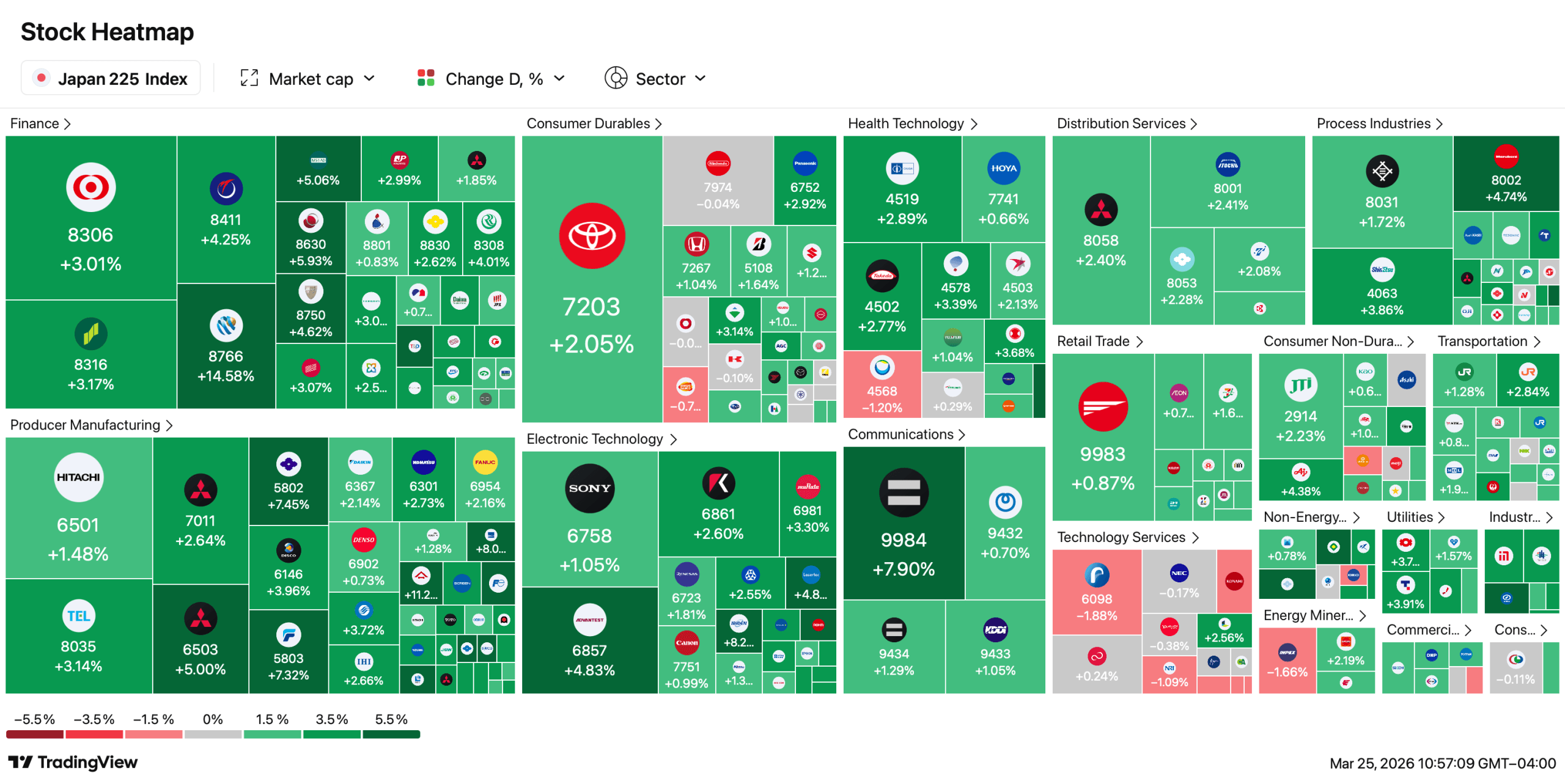
In a twist worthy of a soap opera, Israel disclosed that it wouldn’t be targeting any more Iranian energy assets, presumably after receiving a stern talking-to from U.S. President Donald Trump. In a move likely to make history books, Trump also announced “productive talks” with Iran and rolled out a 15-point peace proposal, while conveniently postponing planned strikes on Iranian power plants.
Iran, in its own melodramatic fashion, hinted at a limited reopening of the Strait of Hormuz for vessels that are not engaged in hostilities. This strait is a crucial thoroughfare that carries roughly 20% of the world’s oil and liquefied natural gas shipments. When Iran decided to slam the door shut on access following U.S. and Israeli airstrikes, oil prices skyrocketed above $100 per barrel, sending investors into a tailspin. It’s almost as if they didn’t see it coming!
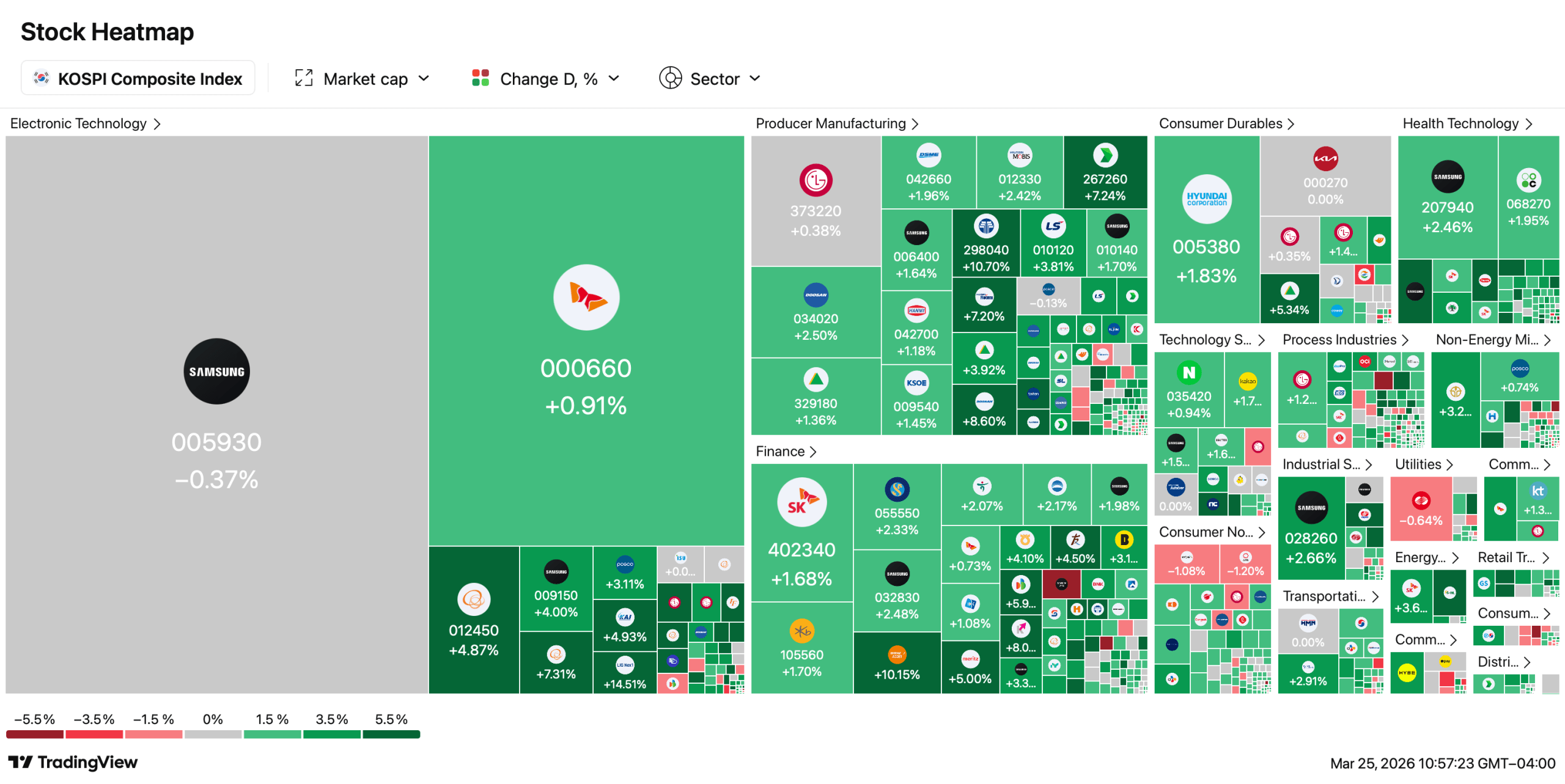
The Asian markets were hit hardest, with Japan importing around 90% of its oil from the Middle East. South Korea is playing a similar game of energy dependency. But as fears eased and oil prices took a nosedive, investors jumped back into equities like a kid onto a trampoline. In Japan, broad-based buying ensued, with energy-sensitive and export-oriented stocks leading the charge.
Meanwhile, in Hong Kong, investors decided to take a gamble on undervalued tech and financial stocks, hoping that stabilized trade flows would sprinkle some fairy dust on earnings. In South Korea, Samsung Electronics and SK Hynix contributed significantly to the KOSPI’s bounce-back, as lower input cost expectations and renewed foreign inflows offset earlier panic-driven selloffs.
Across the pond, U.S. stocks and European markets displayed similar relief, even though analysts cautioned that the conflict remains unresolved. When Wall Street opened, the Nasdaq Composite soared by a whopping 264.88 points to reach 22,026.78, while the Dow Jones Industrial Average added 337.60 points to hit 46,461.66. The S&P 500 gained 51.49 points to land at 6,607.86, and the NYSE Composite rose 129.86 points to settle at 22,101.16 just before 11 a.m. Eastern time on Wednesday. No one was panicking this time!
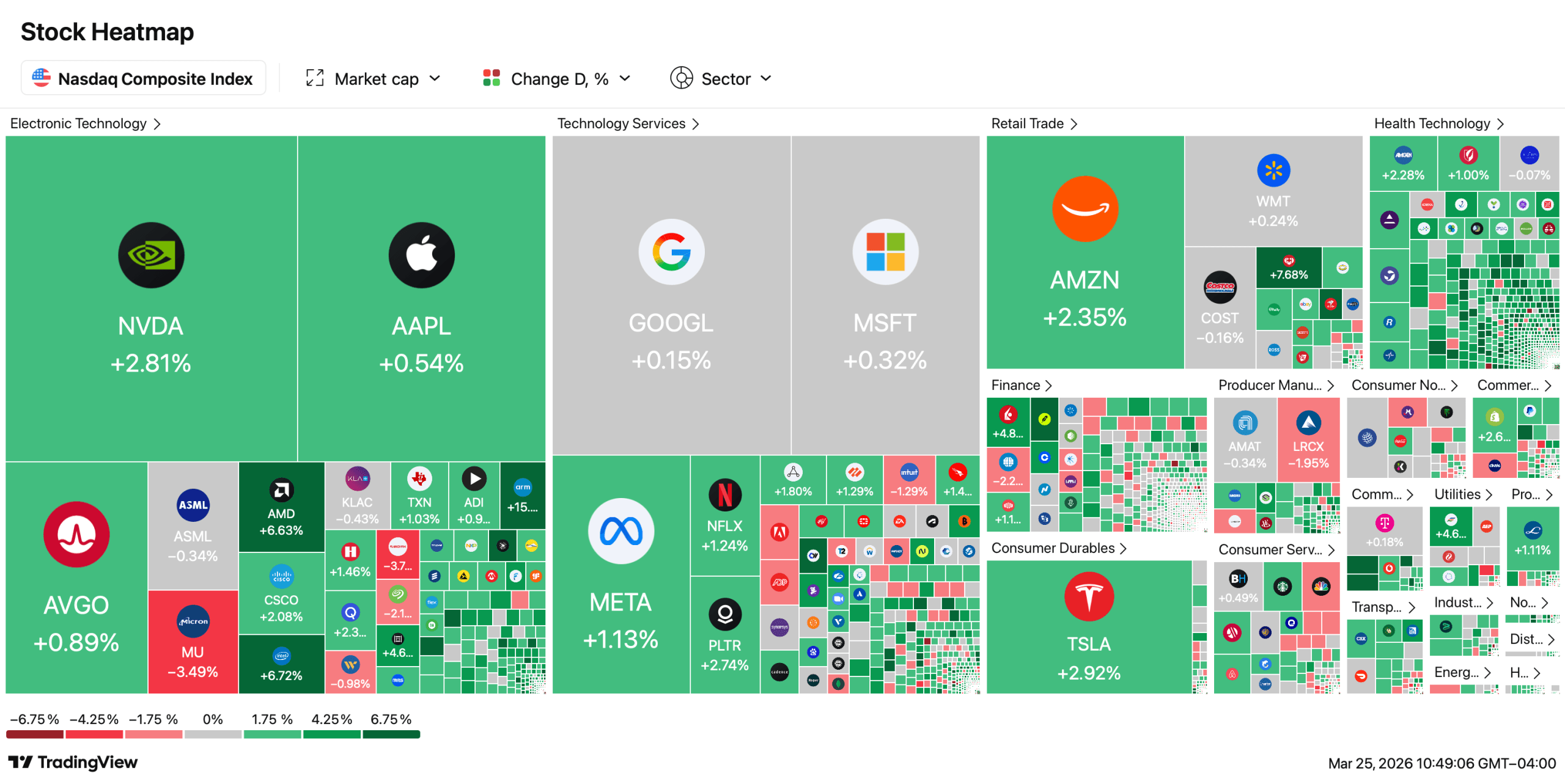
This collective market rise reflects the same geopolitical sigh of relief that drove Asian markets, as investors began to price in a reduced risk to energy supply due to the ongoing U.S.-Iran negotiations and a calming of tensions in the Strait of Hormuz. However, should the negotiations collapse like a poorly made soufflé, we could see oil prices surge again and drag the markets down with them.
If March taught us anything, it’s that sentiment can turn on a dime. We saw double-digit percentage swings in either direction that could make your head spin. Investors watching this rally are now keeping a close eye on whether these lower energy costs will lead to actual relief in inflation data as we head into the second quarter, and what that might mean for central banks, including the Federal Reserve and the Bank of Japan.
The latest trading sessions in equities showcase just how tightly intertwined Asian equity performance is with Middle Eastern supply stability – a structural condition that hasn’t changed, even if the immediate threat has backed off a bit.
FAQ 🔎
- Why did Asian markets rally on March 25, 2026? Investors responded to de-escalation signals in the U.S.-Israel-Iran conflict, including Israeli pledges not to strike Iranian energy infrastructure and Trump’s announcement of peace talks, which eased fears of prolonged oil supply disruptions.
- What is the “energy relief” trade? It refers to buying in oil-import-dependent markets – particularly Japan, South Korea, and Hong Kong – when threats to Middle Eastern supply ease and energy prices pull back.
- How did the Strait of Hormuz affect oil prices in early 2026? Iran’s move to restrict the strait following U.S. and Israeli airstrikes pushed crude prices above $100 per barrel, driving inflation fears and sharp equity selloffs across Asia.
- Which Asian indices gained the most on March 25, 2026? Japan’s Nikkei 225 led with a gain of approximately 2.90%, followed by Hong Kong’s Hang Seng at 2.79% and South Korea’s KOSPI at 1.59%.
Read More
- Brent Oil Forecast
- Silver Rate Forecast
- Gold Rate Forecast
- TRX PREDICTION. TRX cryptocurrency
- EUR AUD PREDICTION
- Binance & HTX Get Pakistan’s Green Light – What Now? 😏
- Bitcoin Tycoons Outwit Gravity, Accumulate 640k BTC – 26% Yield Magic! 🚀💸
- BTC PREDICTION. BTC cryptocurrency
- OP Token’s Comedic Surge: Bulls Aim for $1.20 with a Dash of Sarcasm 🤑
- GBP CHF PREDICTION
2026-03-25 18:27