The world’s a stage, and the actors are tripping over their lines. Geopolitical tensions, those old troublemakers, are kicking economies in the shins, and Asia’s currencies are doing the cha-cha into the abyss. The Philippine peso, once a proud dancer, stumbled to 60.8 per dollar on Monday, its knees buckling under the weight of the world’s folly.
That peso, bless its heart, has been on a slide since March, shedding over 5% of its dignity. Bloomberg, ever the gossip, reported that the Bangko Sentral ng Pilipinas (BSP) is sitting on the sidelines, claiming its intervention is “limited to tempering large swings that could affect inflation rather than defending any specific level.” In other words, they’re handing out band-aids at a knife fight.
The Philippines, poor soul, is one of Asia’s most exposed economies to the supply disruption. It imports a whopping 98% of its oil from the Gulf, which is about as smart as building a house on quicksand. Last week, President Ferdinand Marcos Jr., in a move that screams “I’m trying, okay?”, declared a state of national energy emergency via Executive Order 110. The lights are flickering, folks.
Follow us on X to get the latest news as it happens
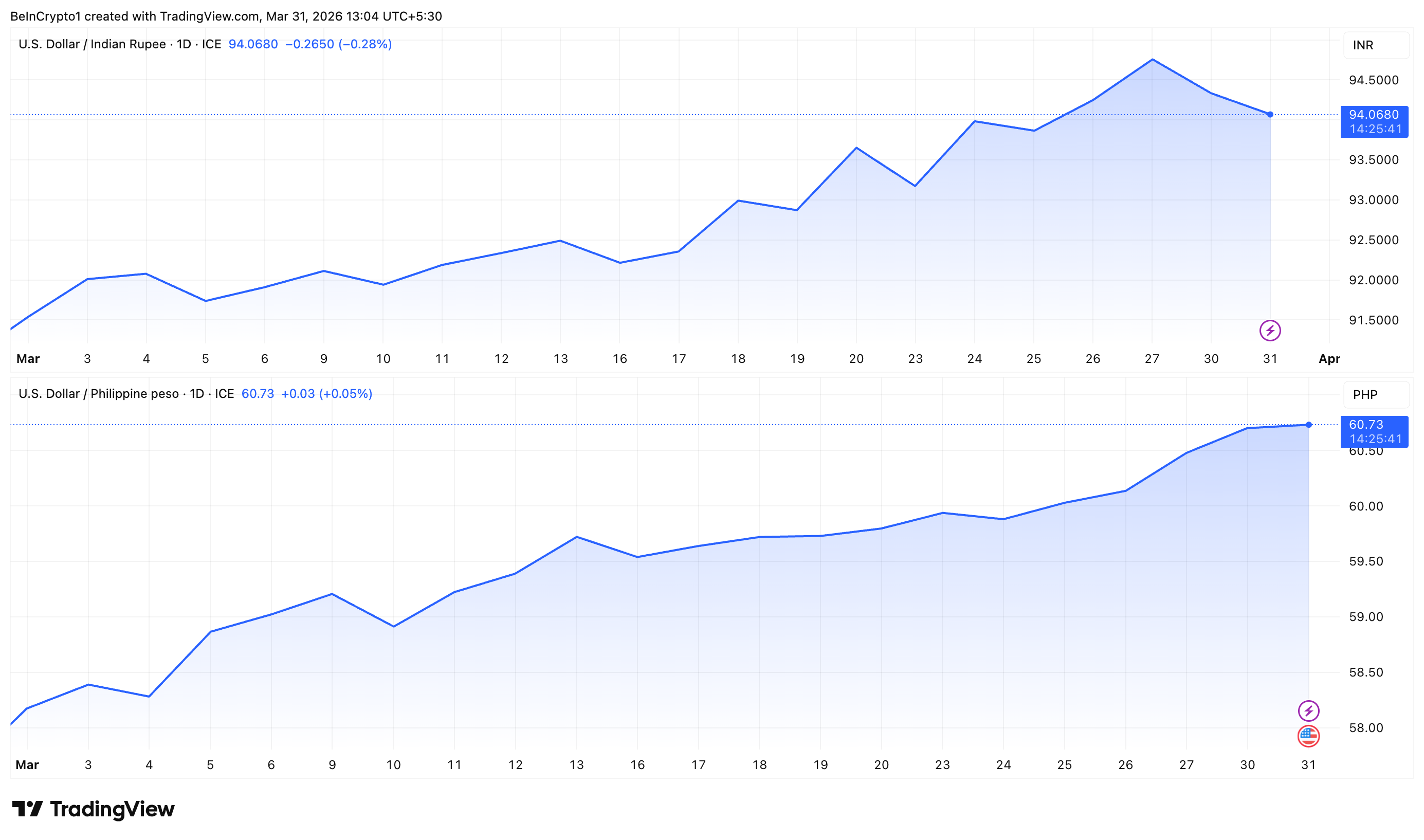
Meanwhile, over in India, the rupee took a nosedive past the 95-per-dollar mark for the first time on Monday, hitting an intraday low of 95.2. That’s an 11% drop over India’s fiscal year, the steepest fall since 2011-12. The Reserve Bank of India (RBI), in a desperate attempt to stop the bleeding, capped banks’ net open positions in the onshore forex market at $100 million per day. It’s like trying to bail out the Titanic with a teacup.
The measure, of course, provided about as much relief as a bandaid on a bullet wound. Foreign investors, those fickle creatures, offloaded more than $19 billion worth of Indian equities over the past year, with outflows hitting an all-time monthly high in March. Soaring oil prices, thanks to the Middle East’s latest drama, have everyone clutching their pearls and wondering if India’s economy will survive the storm.
“The bottom line is that the RBI’s cap does not change the underlying dynamics that fuelled pressure on the currency,” analysts at Barclays said in a Monday note, stating the obvious with all the subtlety of a sledgehammer. “The INR remains particularly vulnerable to an oil supply shock, while India’s balance of payments position may deteriorate further, and capital and financial account pressures are increasing.”
With the Strait of Hormuz still largely closed to commercial traffic, both countries are staring into the abyss, hoping their central banks can hold the line. The coming weeks will tell if the RBI’s caps and the BSP’s selective intervention are enough to keep the ship afloat-or if they’re just rearranging deck chairs.
Read More
- Gold Rate Forecast
- CNY JPY PREDICTION
- Brent Oil Forecast
- Kraken’s Jesse Powell Dodges Legal Storm with Style 🌀⚖️
- USD TRY PREDICTION
- OP PREDICTION. OP cryptocurrency
- SOL PREDICTION. SOL cryptocurrency
- Silver Rate Forecast
- USD CNY PREDICTION
- USD MYR PREDICTION
2026-03-31 11:21