What to know:
- Bitcoin is more than 50% through its current halving cycle, with issuance at 3.125 btc per block and an inflation rate below 1% as supply trends toward its 21 million cap.
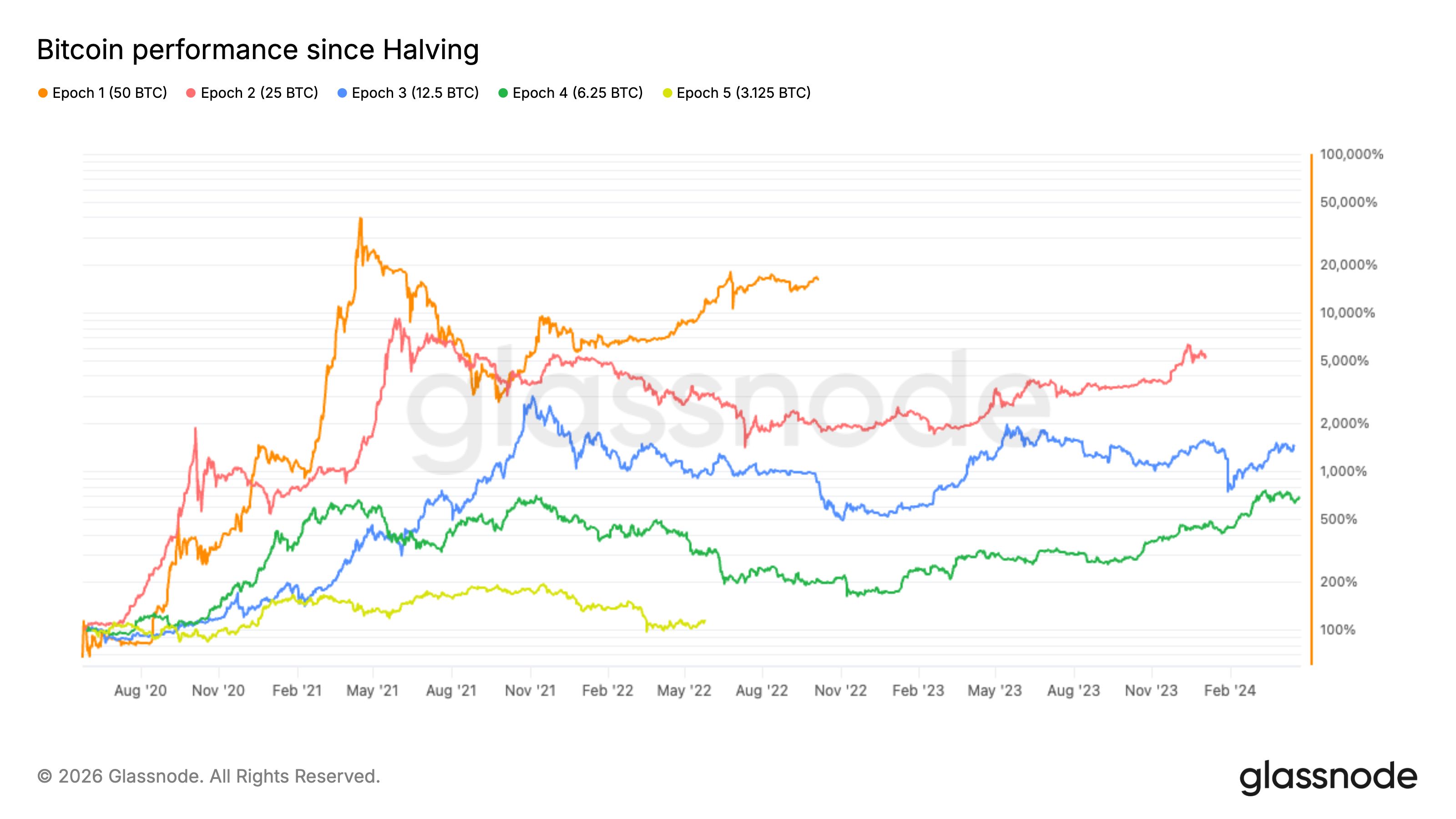
- Bitcoin price performance is more muted this cycle, up around 15% since the April 2024 halving, highlighting diminishing returns as adoption grows and volatility declines.
According to mempool.space, the Bitcoin network has completed over half of its current halving cycle and the next halving is anticipated around April 12, 2028 – less than two years from now.
This cycle, known as “epoch 5”, which began in April 2024 and will continue through to 2028.
Approximately every four years, or every 210,000 blocks, the reward given to Bitcoin miners is cut in half. This event is called a halving.
Bitcoin’s issuance is managed by a process that also steadily decreases the rate at which new bitcoins are created – currently, that rate is less than 1% per year. Currently, for each new block of transactions added to the network, 3.125 bitcoins are awarded to the miner who added it. Since new blocks are added roughly every 10 minutes, about 450 bitcoins are created each day.
The system aims to create a new block approximately every 10 minutes. To achieve this, the difficulty of mining is automatically adjusted roughly every two weeks (2,016 blocks). If blocks are being found too quickly, the difficulty increases, and if they’re being found too slowly, it decreases. This ensures a consistent rate of new coins being released.
As Bitcoin continues to operate, its supply is steadily approaching its limit of 21 million coins. With roughly 105,000 blocks left to mine in this current cycle, each new block created reduces the rate at which new coins are issued, increasing its scarcity over time. Reaching the milestone of 20 million coins mined highlights this scarcity – it’s estimated the final million coins will take around 114 years to be mined.
Bitcoin post-halving gains lag prior cycles
Since Bitcoin’s halving event in April 2024, its price has increased by about 15%, going from around $64,000 to nearly $75,000. It previously hit a peak of approximately $126,000 in October 2025 before dropping to $60,000 by early February. However, data from Glassnode suggests that Bitcoin’s performance hasn’t been as strong this cycle compared to previous ones, indicating a pattern of decreasing gains after each halving.
It’s natural to see this happening as Bitcoin becomes more established. With more people using it and its overall value increasing, it takes more money to create significant price increases. Because of this, price swings are getting smaller with each new cycle, and price changes are happening more slowly and steadily compared to how they used to.
Read More
- Silver Rate Forecast
- Brent Oil Forecast
- Gold Rate Forecast
- Stablecoins, RWAs, and the Crypto Industry’s Midlife Crisis
- BTC PREDICTION. BTC cryptocurrency
- XRP’s ETF Waltz: $1.2B Inflows, Yet Price Does the Limbo at $1.30
- Bhutan Dumps Bitcoin: The Tiny Nation’s Big Cash-Out!
- US and Iran in Pakistan: Crypto’s Wild Ride on a Prayer and a Fragile Peace Deal!
- Mnemonic Mishaps: South Korea’s Tax Agency Seeks Crypto Custodians with a Dash of Decorum
- When Greed Meets Ethereum: A Tale of Billionaire Dreams and Digital Fool’s Gold 😂
2026-04-14 15:25