Americans now expect inflation to be 4.8% over the next year, signaling that rising prices remain a concern. This also challenges the belief that Bitcoin and other cryptocurrencies can protect against ongoing inflation.
Summary
- May one year US inflation expectation at 4.8%, up from a 4.5% preliminary reading and 4.7% previously
- Market research from Bitwise and others shows Bitcoin has become more correlated with inflation expectations since 2020, but not in a simple hedge like way
- Studies and market analysis suggest Bitcoin behaves more like a high beta risk asset than a reliable inflation shield, even as it soaks up “monetary debasement” narratives
U.S. inflation expectations for the next year increased to 4.8% in May, up from an initial reading of 4.5% and slightly higher than the previous 4.7%. This rise is causing uncertainty about what it means for Bitcoin (BTC) and the wider cryptocurrency market.
A Reuters report published on May 22, 2026, shows that consumer expectations for inflation are increasing. Expectations for inflation over the next year rose from 4.7% in April to 4.8%, and expectations for the next five years jumped from 3.5% to 3.9%.
According to Joanne Hsu, director of the Surveys of Consumers, the rising cost of living remains a major worry for many people. In fact, 57% of consumers recently said high prices are impacting their finances, an increase from 50% last month. The survey also showed that people who identify as independent or Republican are feeling particularly pessimistic, with both groups reporting their lowest levels of confidence since the current president took office.
Why 4.8% inflation expectations matter for Bitcoin and risk assets
While it might seem like a small step, this change suggests growing concern that inflation won’t quickly return to the Federal Reserve’s goal of two percent.
Tim Draper points out that while the dollar’s value decreases by 5-10% each year due to inflation, it’s losing value much faster – around 50% – when compared to Bitcoin.
— Trending Bitcoin (@TrendingBitcoin) May 22, 2026
Other economic indicators support this trend. For example, the St. Louis Fed’s measure of inflation expectations, which looks at Treasury bonds, has stayed above 2.3% as of late May. Experts at the Peterson Institute also point out that tariffs, large government deficits (around 7% of the economy), and a tight labor market continue to raise the possibility of higher US inflation in 2026.
Bitcoin and other cryptocurrencies are now part of the mainstream financial world. Once a niche interest, Bitcoin has become a major asset worth hundreds of billions of dollars. It’s now regularly discussed by financial institutions and closely followed by news sources like crypto.news as part of broader economic analysis.
Over the past 25 years, overall inflation in the US has risen significantly, by 92%. While the cost of items like new TVs has decreased, essential expenses such as food (up 105%), housing (up 111%), and hospital services (up 281%) have increased dramatically.
— Bitcoin News (@BitcoinNewsCom) May 18, 2026
It’s easy to assume that if people expect inflation to rise, they’ll naturally invest in Bitcoin and other major cryptocurrencies like Ethereum, hoping to protect their money from central banks creating more currency. However, the situation is actually more complex than that.
Is Bitcoin actually an inflation hedge or just a macro trade
According to research from Bitwise Investments, Bitcoin’s relationship to inflation expectations has changed significantly since 2020. Initially, it wasn’t closely tied to inflation, but it’s now strongly correlated – especially after inflation rates began to rise following the economic disruption caused by the COVID-19 pandemic.
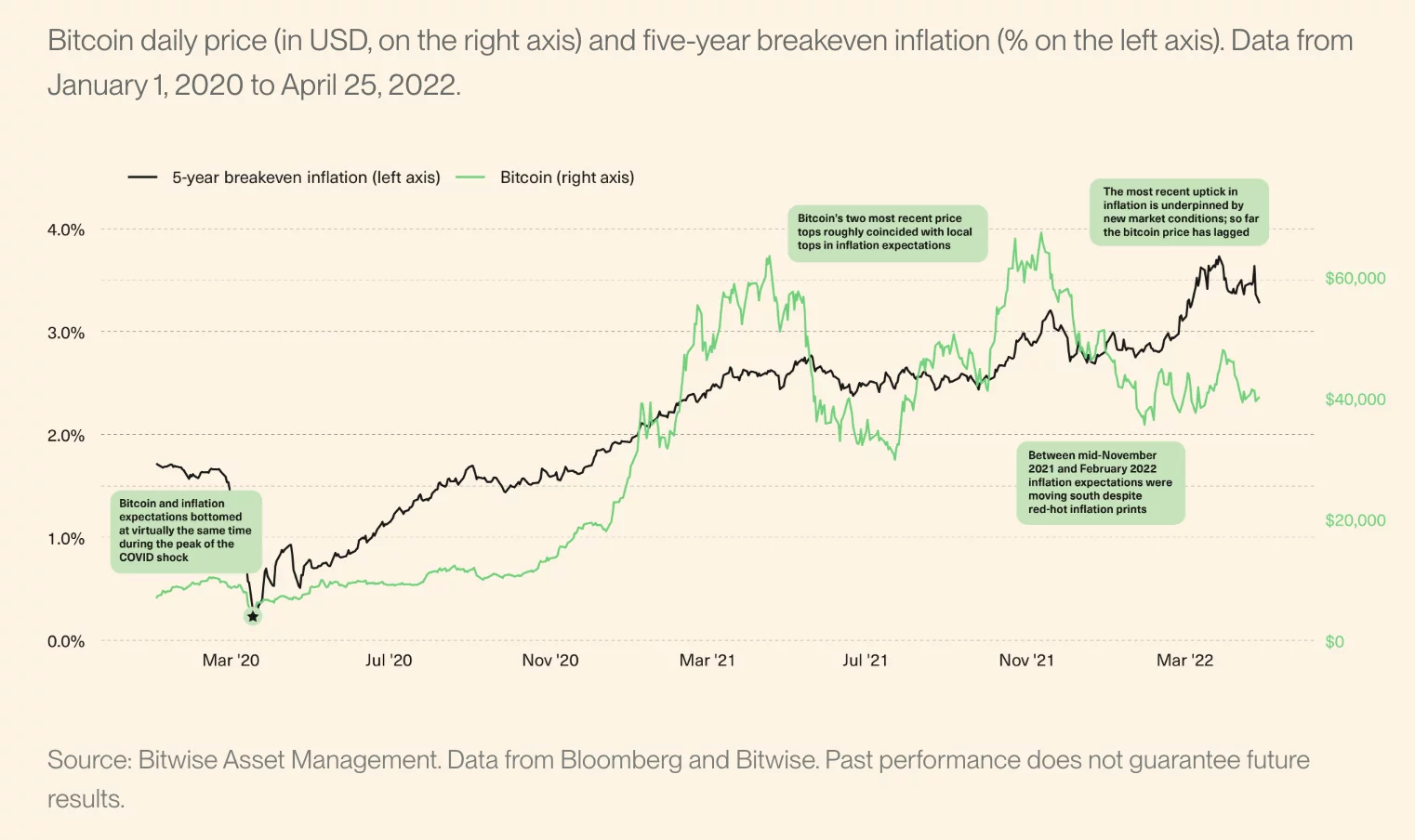
The analysis also shows Bitcoin hit its lowest point around the same time inflation expectations did in March 2020. Furthermore, peaks in inflation expectations in April and November 2021 coincided with Bitcoin’s highest prices, indicating that investors are starting to view Bitcoin as a new type of currency and a way to protect against rising inflation.
Just because Bitcoin and inflation sometimes move in the same direction doesn’t mean Bitcoin actually protects against inflation. A 2023 study by PortfolioPilot found that Bitcoin prices often *fall* when inflation unexpectedly rises, because investors anticipate the Federal Reserve will raise interest rates to combat it. This behavior is more similar to that of risky tech stocks than to traditional inflation hedges like gold.
Bitcoin is currently influenced by two opposing factors. Firstly, it’s seen as a protection against inflation, attracting investors when inflation rises – currently around 4.8%. However, rising interest rates and reduced market liquidity can also negatively impact Bitcoin, potentially leading to forced selling, as we’ve previously reported on liquidation levels and exchange activity.
Looking back at past market behavior highlights this conflict. When US inflation sharply increased between 2021 and 2022 – peaking above 7% annually – Bitcoin’s price actually fell dramatically, from around $69,000 to below $20,000. This drop wasn’t primarily *because* of inflation, but rather due to the Federal Reserve quickly raising interest rates – the fastest increase in forty years. This, combined with failures of companies like Terra and FTX and resulting market liquidations (as we’ve previously discussed), caused the price decline.
Today’s shift in expectations to 4.8% is uncertain. If investors think inflation will stay high while central banks are hesitant to raise interest rates, it could boost the argument for Bitcoin and major cryptocurrencies like Ethereum (as tracked on crypto.news). This is especially true for younger investors who already see crypto as a way to protect against long-term declines in the value of traditional currencies.
If traders believe rising expectations will push central banks to raise interest rates, they might start seeing Bitcoin not as a safe haven like gold, but as a risky asset that falls in value when borrowing money becomes more expensive.
The recent 4.8% inflation expectation for May suggests a key risk for cryptocurrency: it’s become heavily linked to inflation as an investment, but its stability is uncertain. Instead of acting as a safe haven during economic trouble, it currently behaves more like a highly sensitive part of the overall economic cycle.
Read More
- USD JPY PREDICTION
- APT PREDICTION. APT cryptocurrency
- Gold Rate Forecast
- WLFI PREDICTION. WLFI cryptocurrency
- SOL PREDICTION. SOL cryptocurrency
- USD RUB PREDICTION
- ZEC PREDICTION. ZEC cryptocurrency
- PEPE PREDICTION. PEPE cryptocurrency
- HYPE PREDICTION. HYPE cryptocurrency
- USD CNY PREDICTION
2026-05-22 17:37