In the farcical world of digital finance, where the only constant is change, the humble decentralized exchanges (DEXs) have emerged as the unexpected stars of the perpetual futures circus, capturing nearly 20% of the global market. A triumph, one might say, for the anarchic spirit of crypto, though one wonders how long before the clowns trip over their own ledgers.
Solana, Ethereum: The Unlikely Heroes of This Onchain Farce
Perpetual DEXs, those bastions of self-importance, processed a staggering $6.7 trillion in cumulative trading volume in 2025. A 346% increase from 2024, you say? How delightful. Monthly volumes, it seems, have repeatedly exceeded $1 trillion, while daily activity in early 2026 has peaked between $7 billion and $8 billion. Platforms like Hyperliquid, Aster, and Lighter have been the ringmasters of this circus, though one suspects their tents are pitched on quicksand.
The momentum, if one can call it that, continued into Q1 2026. According to a Coingecko report, combined centralized exchange (CEX) and DEX perpetual futures volume reached $7.24 trillion in January, up 75% from January 2024. Of that, DEX platforms contributed $739.48 billion, an eightfold growth. DEX market share climbed to 19.2% in January, a sharp rise despite a slight pullback tied to the whims of the market gods.
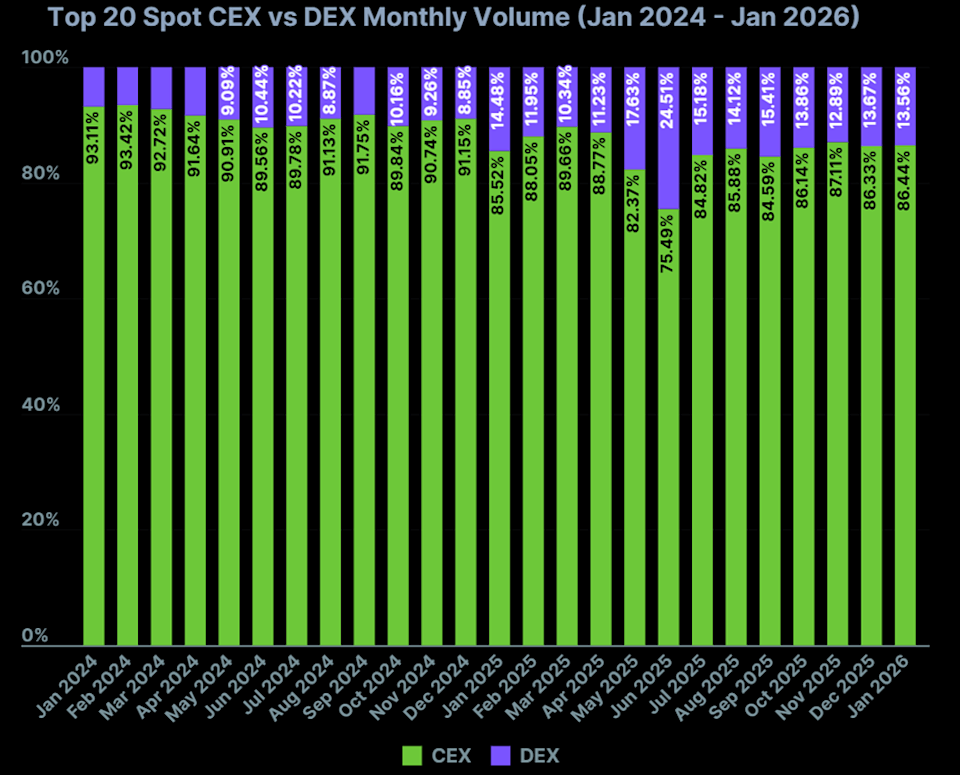
The ratio of DEX-to-CEX perpetual trading has expanded significantly since 2024, from roughly 6% to as high as 18% at peak periods. Analysts, ever the optimists, describe this as a structural shift rather than a short-term spike. Decentralized platforms, it seems, are no longer content with their niche and are now vying for the throne of leveraged trading. How quaint.
Improved execution quality, they say, has been a key driver. Onchain orderbooks, upgraded oracle systems, and low-fee structures have reduced latency and slippage, making DEX trading almost as efficient as its centralized counterparts. Some platforms even offer taker fees as low as 0.035%, alongside revenue-sharing and token buyback mechanisms. A veritable feast for the yield-hungry trader.
Liquidity incentives have also played their part. Airdrops, points programs, and liquidity provider rewards have drawn traders like moths to a flame, all seeking yield opportunities and the illusion of self-custody. New entrants like Aster and Lighter have used these strategies to compete with centralized exchanges, accelerating capital inflows into decentralized markets. How very entrepreneurial.
At the infrastructure level, blockchain upgrades have reduced friction for high-frequency trading. Solana’s Alpenglow consensus overhaul promises transaction finality in 100 to 150 milliseconds, a marked improvement. On Ethereum, upgrades like Pectra and PeerDAS aim to enhance scalability, reduce fees, and improve interoperability. Efficiency, it seems, is the new black.
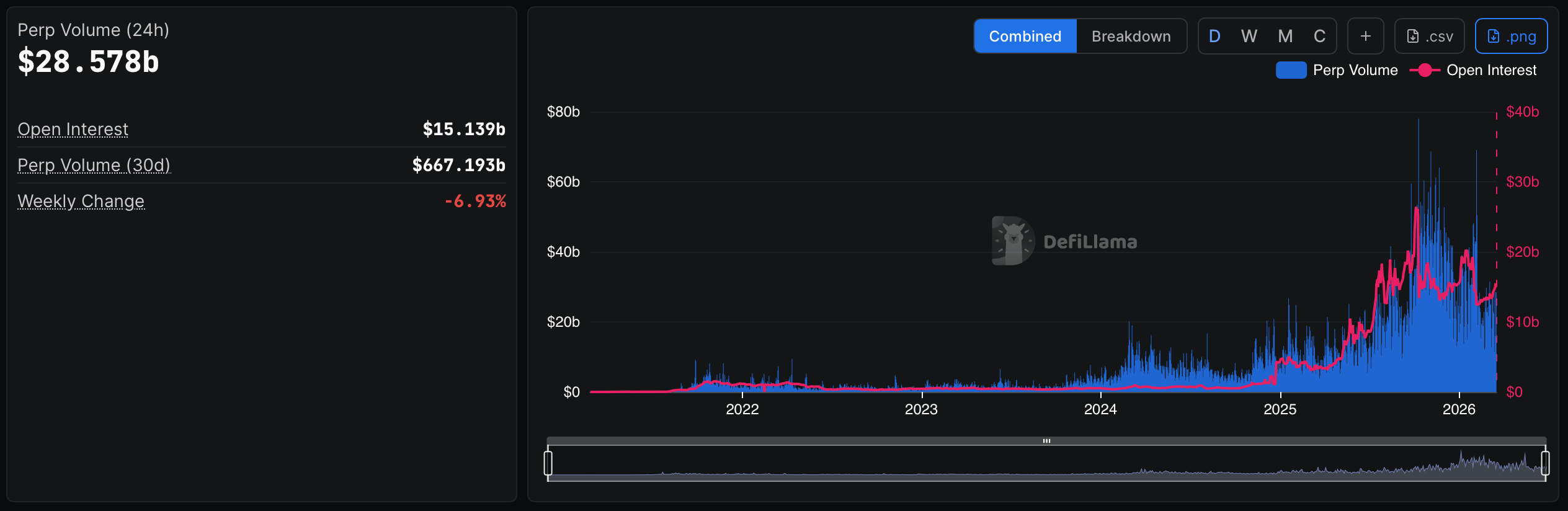
Leading platforms continue to consolidate their positions. Hyperliquid, with its $2.9 trillion in trading volume in 2025, remains dominant, while Solana-based protocols like Drift and Jupiter Perps have benefited from network upgrades. A pecking order, if you will, in this digital aviary.
Despite their rapid growth, centralized exchanges still hold the majority of derivatives trading volume, with an estimated 80% to 90% market share. However, the steady rise of DEX participation suggests that onchain perpetuals are becoming a core component of digital asset market infrastructure, rather than a mere sideshow. How the mighty have been challenged.
FAQ 🔎
- What are perpetual futures on decentralized exchanges?
Perpetual futures are leveraged crypto contracts traded on DEXs without expiration dates, allowing continuous long or short positions. A gambler’s dream, if ever there was one. - Why are traders moving from CEXs to DEXs?
Traders are shifting due to lower fees, improved execution, self-custody of assets, and incentive programs like airdrops. The siren call of decentralization, one might say. - How large is the DEX perpetual trading market in 2026?
DEX platforms processed about $739 billion in January 2026 alone, representing roughly 19% of total perps volume. A significant slice of the pie, though one wonders how long it will last. - Which platforms lead onchain perpetual trading?
Hyperliquid, Aster, Lighter, and Solana-based protocols like Drift are among the leading platforms by volume. The usual suspects, it seems.
Read More
- Gold Rate Forecast
- Brent Oil Forecast
- Silver Rate Forecast
- EUR USD PREDICTION
- OMG, Are Memecoins Over? Pump.fun’s Revenue Just Took a Nosedive 🤔
- Whales Weep, Bulls Sleep: LDO’s Plunge to $0.45? 😱💸
- USD VES PREDICTION
- ETH PREDICTION. ETH cryptocurrency
- Machi Big Brother’s Bold ETH Bet: Loss, Irony, Fate
- AVAX’s $18 Gambit: Will It Pay Off?
2026-03-18 02:00